Ryan, a Collections Assistant for the HOPE for the Future Project at Oxford University’s Museum of Natural History, tells us about the important work of the project, and how he first became interested in insects.
Ryan mentions catching grasshoppers in his hands as a child. Have you found any insects in your garden or local green space? What were they? We would love to hear about them in the comments below, or through our contact us page.
When the weather is chilly there aren’t many insects about, but we still have lots of online ‘Crunchy’ insect activities for you to try. We hope they will boost your insect expertise!
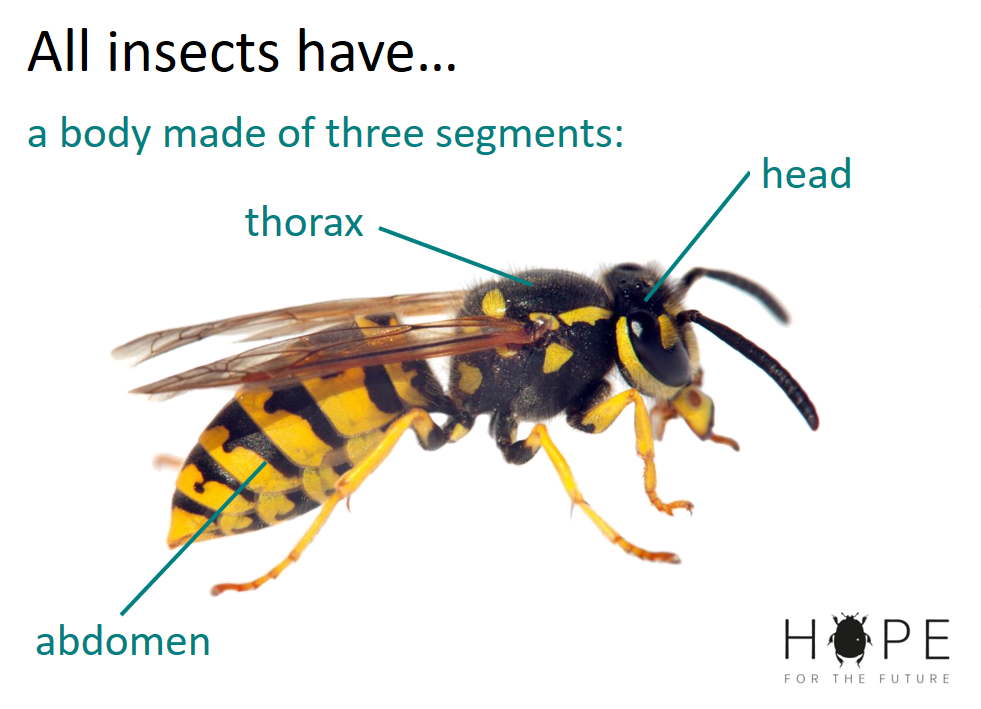
How to spot an insect
What makes an insect an insect? How to spot an insect is an introduction to insect anatomy: the body parts that make up an insect. Discover the key features entomologists use spot insects and how insects are different from some of their close relatives. You can then test yourself with our quick quiz!
Insect ID
Ever wondered what that insect is? Insect ID takes you into a deeper exploration of the ‘Big 5’ groups of insects in Britain:
beetles
bees, wasps & ants
butterflies & moths
true flies
true bugs.
Discover the differences between them, learn how to spot each type and put your skills to the test with our ID challenge.
Know your bees
There is more to bees than hives and honey! Know your bees explores some of the rich variety of bees found in Britain. We’ve also included some tools to help you make your own observations of bees.
If you’d like to go a bit further and, as the weather gets a bit warmer, get outside and do some investigating of your own, why not try one of our inset investigation ideas:
Different flowers asks whether different types of flower attract different insects
Insect Pollination investigates the range of important insect pollinators (it’s not just bees!)
Time of day explores whether different insects visit flowers at different times of day
We would love to hear how you get on. Get in touch using the comments below or the Contact Us page.
Tucked away in the Oxford University Museum of Natural History’s Entomology (insect) department, are a series of mysterious looking cabinets, all labelled with a yellow circle with” PR (Priority Rescue)” on them. But why? What does this mean? What is in these Cabinets?
Priority rescue is referring to the fact that in case of a fire, or other emergency that could cause damage to items within the museum, these cabinets are to be rescued first, before other items. But they aren’t filled with expensive technology, or millions of pounds of precious gems. They contain something totally irreplaceable and priceless: type specimens.
What are Type Specimens?
When it comes to Taxonomy, type specimens have a really important role. Taxonomy is the process of naming, describing and organising living things. It involves choosing names for organisms based on the features they share with other organisms.
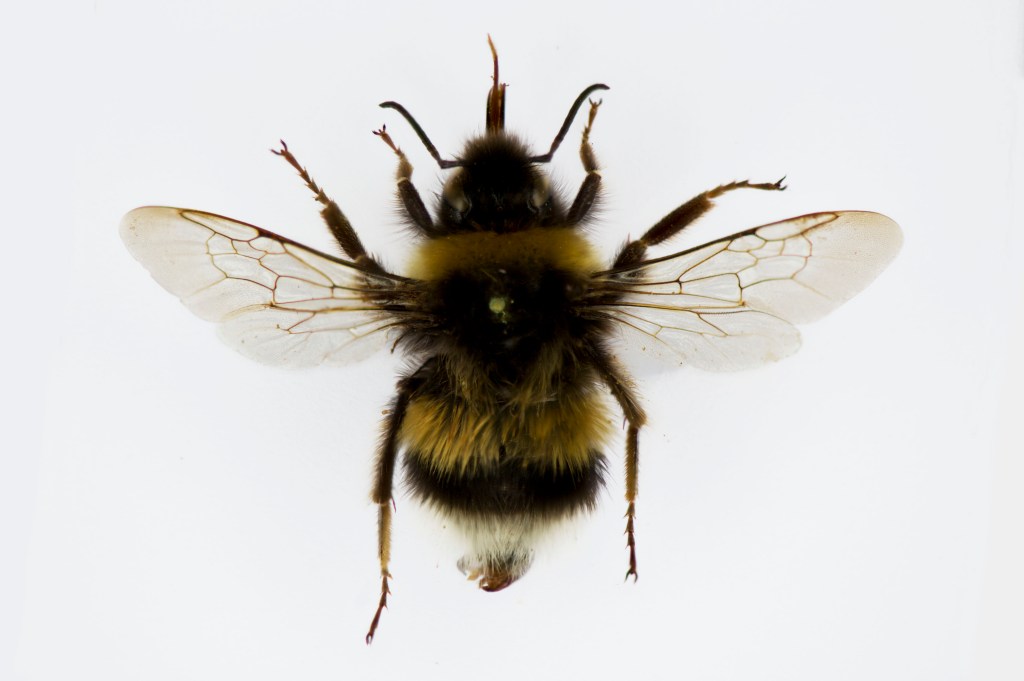
For example Bombus subterraneus and Bombus terrestris have the same genus name “Bombus” but have difference species names “subterraneus” and “terrestris”. This means that they are closely related and have similar features, they are still different species. Can you spot some differences?
When a taxonomist names a new species, they will designate a particular specimen the “type specimen”. A type specimen is the physical example of a particular species that all other specimens of that species are compared to.
The Oxford University Museum of Natural History has over 5 million insect specimens. Around 20,000 of these are type specimens, the first specimen of a species to be described and named.
Just to make things more complicated there are some different types of type specimen. Here are just a couple of examples that we have come across:
Holotype: a single physical example of a species, used to describe that species.
Syntype: a series of specimens of a species, used together to describe that species.
Paratype: additional specimen or specimens used, alongside a holotype, to help describe a species.
Iconotype: a drawing of a specimen that is used to describe that species, and serves as the type specimen. At the museum we have a book, William Jones’ Icones. It contains many species of butterflies and moths that are described for the first time and are classed as iconotypes.
By why is it important to have designated type specimens? What do you think? How might they be used? Let us know your thoughts in the comments below, or using the Contact us page. Also, it can be quite a confusing concept, so please do ask us any questions.
At this time of year, after the long winter months, we are all looking for signs of Spring. One thing that entomologists look forward to is the first sightings of bee-flies. These very cute, furry flies start to emerge in late February and early March.
Bombylius major, the dark-edged bee-fly, is one of Erica McAlister’s favourite British insects and she tells us why in this video.
Find out more about Bee-flies
To find out more about bee-flies, check out this page on theDipterists Forum. There is also an excellent guide to bee-fly identification which you can find here.
In addition, the Dipterists Forum run an annual Bee-fly Watch which gathers together records of sightings. This is really important for monitoring changes in distribution and flight period. You can contribute to this important science project by adding your sightings here:
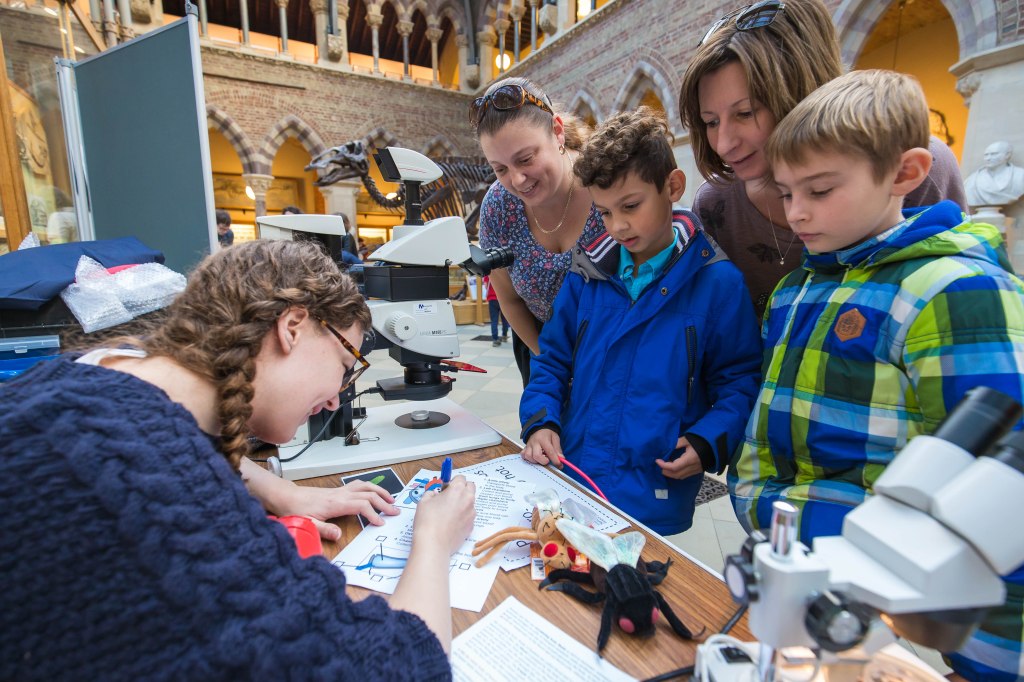
Drop in to the museum for this fun family Science Fair on Saturday 12th March, 12-4pm. Meet experts to find out more about tiny creatures like insects, spiders and more!
No need to book – just come along and, whilst you are in the museum, why not join us for our Insect Show: Insects: Beasties or Besties.
Insects: Beasties or Besties Family Science Show
Saturday 12th March, 1pm and 2.30pm
Ages 6+
Come along to our fun and interactive family show all about insects. You’ll meet a visitor to the museum, with a dislike of insects, who is confronted by a giant talking dung beetle! The unlikely pair take a journey, looking at the wonderful, and vitally important, role of insects in our world.
Please note that the show will be held in the Museum’s Lecture Theatre which has a capacity of 195 seats and social distancing will not be in place. Visitors are encouraged to wear a face mask for the duration of the show and hand sanitiser will be available when you enter/exit.
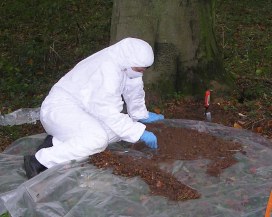
How can insects help solve crimes? In this video, forensic entomologist Dr Amoret Whitaker discusses her work and how she came to work with some common flies that can provide important clues.
The blow flies that Dr Whitaker talks about are a family of flies (Diptera) called the Calliphoridae. They often have bodies with a metallic sheen and are also known as carrion flies, bluebottles and greenbottles. The fly pictured in the video is Cynomya mortuorum, known as the yellow-faced fly or sometimes, more gruesomely, as ‘the fly of the dead’.
Forensic entomology is just one way in which scientists work with insects. If you would like to know more about different entomologists and what they do, visit the People section of the blog.









 Crunchy on the outside