Spiders: Super, Not Scary!

Related to insects, arachnids are a fascinating group of invertebrates. Several species of spider can be found in and around our home at this time of year, but not everyone welcomes them! Here we take a look at some of these super spiders and why there is no need to be scared.

Most spiders don’t want to come into our homes because they are too warm, too dry and there isn’t enough food (or perhaps they feel the same way about humans as many people do about spiders!). A few species do venture into our dwellings and have probably been associated with us for thousands of years and often perform a useful housekeeping job in reducing the number of flies inside the home.

House Spider (Tegenaria domestica).

The House Spider, Tegenaria domestica.

The House Spider builds a funnel-like web. It sits inside waiting for prey to land on the web, emerging quickly to trap it. Indoors, this is the spider we are likely to find in the bath! Some people feel alarmed by them, but they are completely harmless and will retreat into the plughole (or their funnel web) if they feel threatened. The males are active in the summer so when you see a house spider indoors it will probably be a male looking for a mate. The females usually eat them after mating, so the House Spiders you may find in your home in the late autumn will probably be females which can live for two years or more.

Giant House Spider (Eratigena atrica).

Giant House Spider, Eratigena atrica. Image credit: Ryan Hodnet CC BY-SA 4.0

The Giant House Spider has a similar appearance to the house spider but is larger. Females can grow up to 18mm in body length with a leg span of 45mm. Those long legs enable them to be one of the fastest running spiders: they can move at up to 0.5 m/s (1.2 mph). Their speed of movement can be startling but they are in fact easily outpaced by normal human walking speed (4 mph). They only use their speed for short bursts and the females normally stay within their funnel webs. It’s the males we see out and about in our homes in summer and autumn, looking for mates. Although the mouth parts of these spiders are theoretically capable of piercing human skin, they prefer solitude and to retreat when startled and so only bite rarely when provoked. Their venom cannot harm us.

‘Money Spider’ (Linyphia sp.)

This money sider landed on me while I was writing the article!

‘Money Spiders’ are not a single species. Hundreds of different small spiders are called ‘Money Spiders’. In the UK they usually belong to the Family Linyphidae. They get their common name from a folk saying that if one lands on you it’s lucky because it will spin you some clothes, meaning you will come into some money. If anyone has ever had a garment spun by a spider we’d love to hear about it! Money Spiders often land on us in the summer because they travel through the air on strands of silk, a method called ‘ballooning’. Money Spiders are completely harmless to humans and most go entirely unnoticed by us because they are so small.

Daddy Long Legs Spider (Pholcus phalagiodes)

‘Daddy Long Legs’ Spider (Pholcus sp.), not to be confused with a Crane Fly.

The Daddy Long Legs Spider is also known as the ‘Cellar Spider’. It prefers to spin loose strands of web in corners which it uses to capture prey. It is not to be confused with the Crane Fly, also called a ‘Daddly Long Legs’ in the UK, which is a fly, so has a pair of wings. These spiders will often start vibrating if you come close in an effort to scare you off. Alternatively, they may curl up completely and ‘play dead’. They are completely harmless.

Garden Cross Spider (Araneus diadematus).

Garden Cross Spider, Araneus diademata.

The Garden Cross Spider is usually found in the garden, but sometimes venture into our homes, as shown in the picture. They are large web-spinning spiders. Their webs are usually very noticeable on autumn mornings, revealed by drops of dew sticking to the strands. They can be recognised by the distinctive cross pattern on their back. The body of females can be up to 15mm long, although the males are a lot smaller and so we rarely notice them. Females can often be found protecting a ball of eggs or young spiderlings. They will be defensive of these, but are completely harmless.

Want to know more?

If you enjoyed reading about these house spiders, you might also like this post about the colour-changing Crab Spider.

Have you had any spider encounters at home? We’d love to hear about them! You can get in touch using the Contact Us page.
Ashleigh Whiffin

Ashleigh Whiffin tells us about her work as Assistant Curator of Entomology at National Museums Scotland, as well as the slightly unusual way she first became interested in insects, leading to her pursuing a career in entomology.

Ashleigh mentions finding out that carrion insects can help solve crimes. How cool is that? Can you think of any other ways that insects help us? Let us know in the Contact us section of the blog.

FREE Insect fun at the Museum this half term

Don’t forget to join us at the Museum this half term for some fabulous, free insect fun. We have a Science Show for you on Tuesday 26th October, and drop in activities on Monday 25th and Tuesday 26th October. Read on to find out more!

Insects: Bestie or Beastie? A Family Science Show

Join us for our brand new, interactive family Science Show on Tuesday 26th October at 2pm or 3.30pm. Find out what happens when an insect-phobic visitor to the museum meets a giant talking dung beetle!  It promises to be a lot of fun!   Tickets to the show are completely FREE but you do need to book.

Book tickets for Tuesday 26th October, 2pm

Book tickets for Tuesday 26th October, 3.30pm

Take the Crunchy on the Outside Challenge!

On Tuesday 26th October, 1-4pm, Susie and Kate will be in the Museum main court with some fiendish insect challenges for you. Drop by and see if you can solve the puzzles with your insect intellect (no booking needed)!

Flower Power Drop-in Activities

Drop in on Monday 25th and Tuesday 26th October, 1pm – 4pm, for an afternoon of insect crafts, plus getting up close and personal with some fabulous insect specimens.  No need to book; just drop-in! 

Susie and Kate look forward to seeing you there!

FREE Insect fun at the Museum this half term

Join us at the Museum this half term for some fabulous, free insect fun. We have a Science Show for you on Tuesday 26th October, and drop in activities on Monday 25th and Tuesday 26th October. Read on to find out more!

Insects: Bestie or Beastie? A Family Science Show

Join us for our brand new, interactive family Science Show on Tuesday 26th October at 2pm or 3.30pm. Find out what happens when an insect-phobic visitor to the museum meets a giant talking dung beetle!  It promises to be a lot of fun!   Tickets to the show are completely FREE but you do need to book.

Book tickets for Tuesday 26th October, 2pm

Book tickets for Tuesday 26th October, 3.30pm

Flower Power Drop-in Activities

Drop in on Monday 25th and Tuesday 26th October, 1pm – 4pm, for some insect fun in the museum main court with an afternoon of insect crafts, plus getting up close and personal with some fabulous insect specimens.  No need to book; just drop-in! 

Susie and I look forward to seeing you there!

Wonderful woodlice

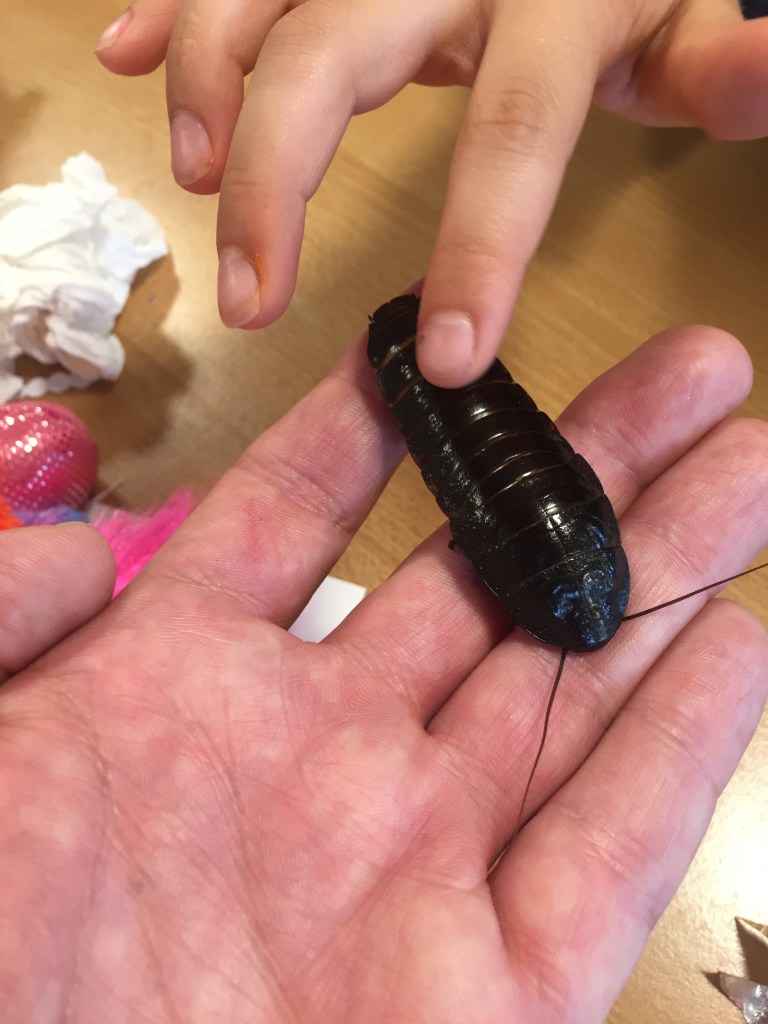
Woodlice are not insects but they are definitely crunchy on the outside, so we’re happy to devote some space to this fascinating group of crustaceans in the order Isopoda. Lucas Brooks, who showed us his woodlice at our recent summer school, writes about his own growing colony.

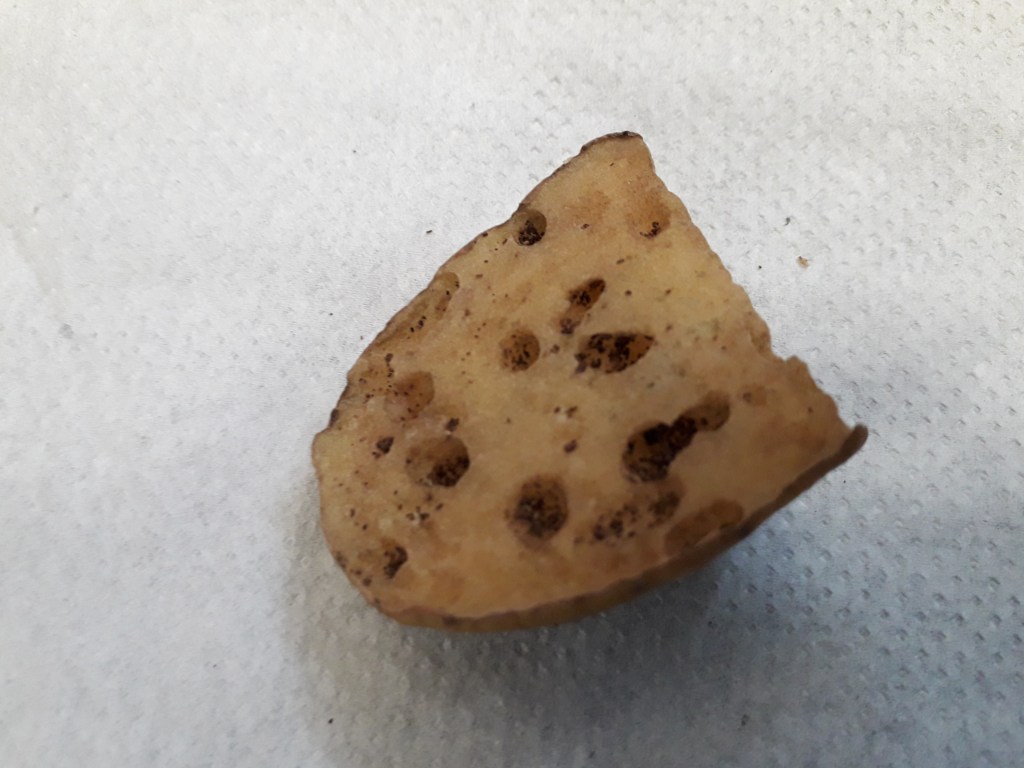
I started a colony of eighteen woodlice I collected from outside my flat.  The woodlice inside the colony appear to consist of a several types (see below). They seem to enjoy eating potatoes more than anything so I have made that their main food source, but they sometimes eat dry leaves and decaying wood. I didn’t expect them to be reproducing so fast so now there are dozens of baby woodlice running around the tank.

Woodlice get their name because they are often found in decaying wood, but Lucas’s love potato too! Image credit: OUMNH / Lucas Brooks

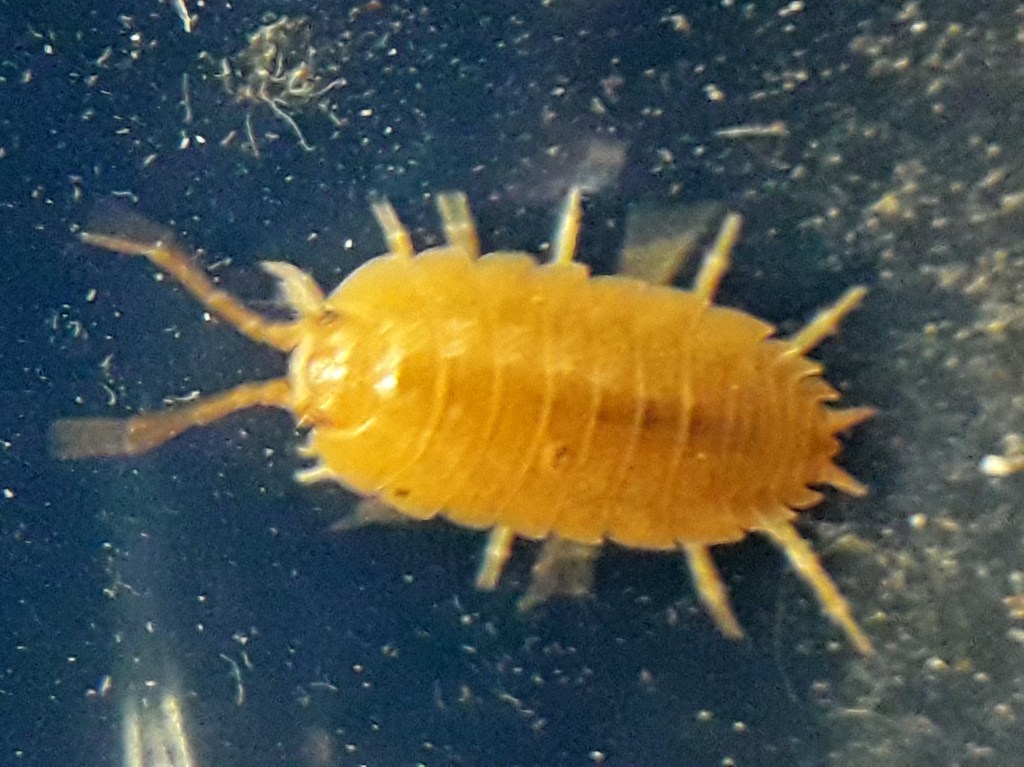
After a few weeks of keeping the wild woodlice, I found out about the orange variants of woodlice which sounded quite interesting. The first ‘’orange woodlouse’’ I got was a common type but with a different colour exoskeleton which is a rusty orange. I then decided to go to my local reptile shop in Kidlington and bought some Giant Orange Woodlice. ‘Giant’ for a woodlouse is up to 18mm. This type of woodlouse seems to hide more, so I don’t see them as often as the other ones. Instead of a rusty colour, these woodlice are pure orange.

An orange woodlouse (Porcellio sp.). Image credit: OUMNH / Lucas Brooks

The reason I am so interested in woodlice is because I never really investigated them before, so it was a fully new experience for me. Plus, the woodlice also being extremely bizarre and intriguing got me into keeping them as pets.

If, like Lucas, you are fascinated by an insect or other invertebrate, please get in touch to let us know! You can write us a message on the Contact Us page.

Types of woodlice

At first glance, all woodlice might look the same but there are in fact hundreds of species in the UK. The one you are most likely to find is the Common Shiny Woodlouse, Oniscus asellus. The last segment of the antennae, called the flagellum, is made up of three segments. They are usually grey but can also have yellow or orange colouration. The Common Rough Woodlouse, Porcellio Scaber, has a flagellum made up of only two segments. Both these woodlice are usually grey but can also have yellowish or orangey colouration. Pill woodlice, such as Armadillium vulgare, also has a flagellum made up of two segments, but their body is more rounded, they are usually black or brown and can roll themselves into a pill-like ball when disturbed.

Insects: bestie or beastie?

What happens when a visitor to the museum, with a certain dislike of insects, meets an accommodating, and rather chatty, giant talking dung beetle?

Find out in the new, interactive family show at the museum , that is all about insects.

Stag beetle (Lucanus cervus) ©OUMNH


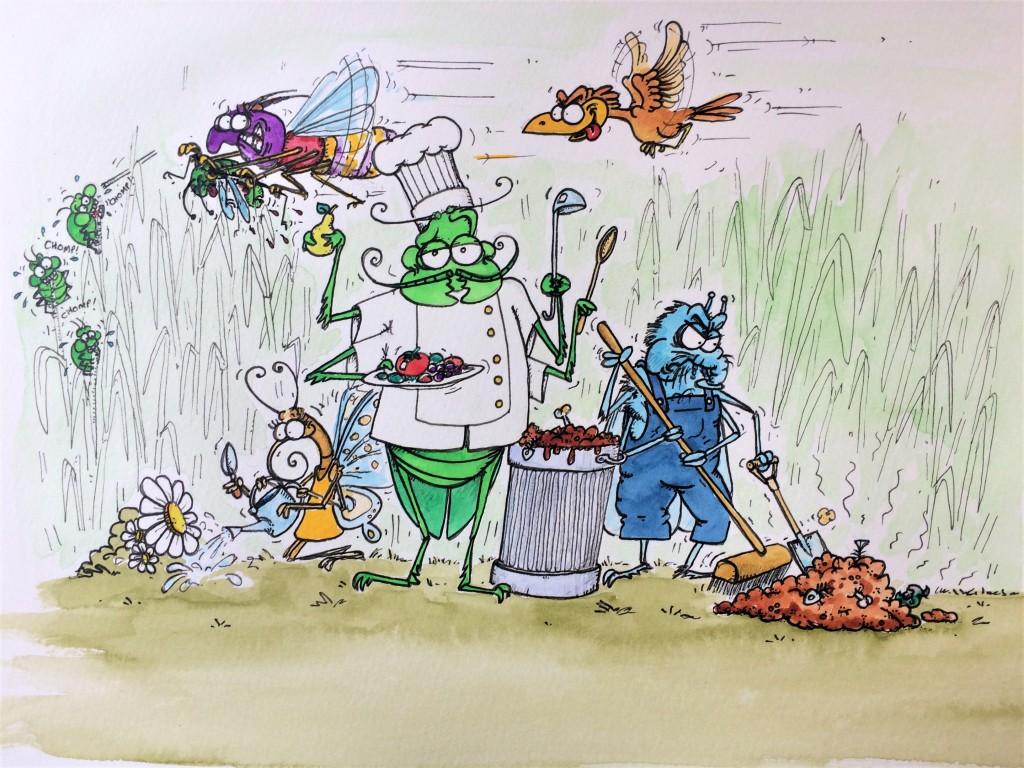
The unlikely pair take a journey, looking at the wonderful, and vitally important, role of insects in our world. From their position as pollinators, to their function in food chains; from the waste they recycle, to the many hours of joy and entertainment they bring as the heroes, and villains, of so many films, TV shows and books.


Come and see the show to find out how and why they are at risk, and what we can all do to help.

Insect Industry © Chris Jarvis


There will be two showings of “Insects: Beasties or Besties?” on Tuesday 26th October at 2pm and 3:30pm. Although the show is free of charge booking is essential. Tickets will be available to book soon. Keep an eye out for them on our What’s on page.