


Are You a Fantastic Fly Finder?
Take part in this exciting ecology project and become a fabulous Fly Finder! Scientists are trying to understand how humans are changing mountain lakes. Insects that live near water are a crucial food source for birds, frogs, and bats. Climate change and predators introduced by humans may be affecting these important species.
Scientists have caught insects in traps and need your help to count the different types. In this citizen-science project from Zooniverse, you will be shown a picture of some flies. The insects you’ll see were hatched in lakes high above sea level in California, where they feed and grow until they’re ready to emerge as flying adults. These adults are often eaten by animals like birds. This makes them a perfect ‘pipeline’, delivering nutrients and energy from the aquatic environment of the lake to the terrestrial environment surrounding it! Your effort on this project will help scientists understand what changes threaten this connection, and what we can expect in years to come.
Start by following this link to Fly Finder. Click on ‘Identify insects’ to start. You can click on ‘Learn more’ first if you want to find out more about the project.

You will see an image of a sticky white card that has been used to catch flies. Looking at the image, you first have to decide what types of fly you can see. That might sound tricky, but there is an on-screen field guide to help you and most of the time you just need to decide whether it’s a ‘small fly’ or a ‘medium fly’. One you have decided, you just select the correct category from the list by clicking on it, then move your mouse (or your finger on a tablet) and click (or tap) on the fly. This will mark it for the researchers.
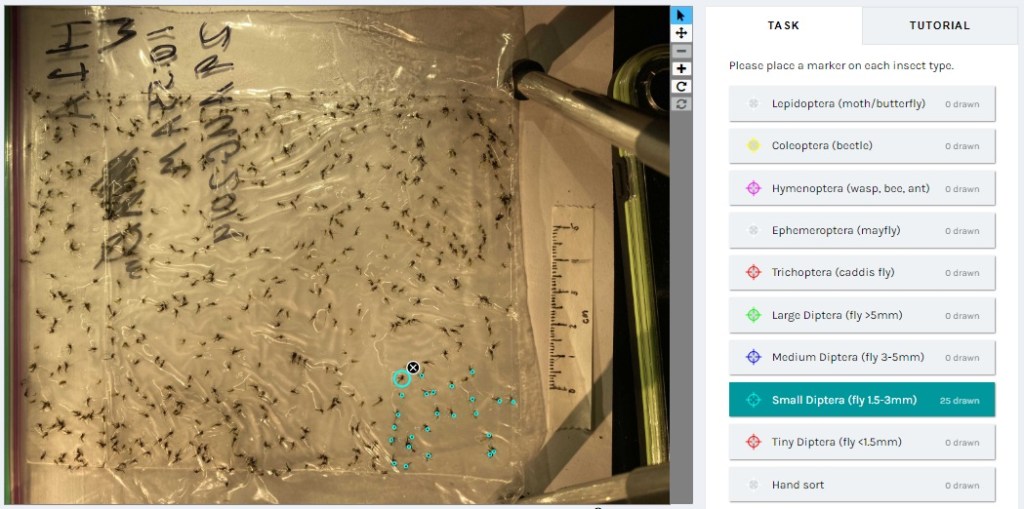
Some of the images show several flies, others show quite a lot and a few will have none at all. You can do as few or as many pictures as you like. Lots of people doing a little each soon creates a lot of results for the scientists. This shows them which types of insect, and how many, are found in the different places where the traps were set.
If you enjoyed Fly finder, or your like the idea of taking part in other projects, why not have a look at our Make and Do page?


 Crunchy on the outside