Chameleon of the spiders: Misumena vatia

If you love spiders, as well as insects, then this post is just for you! HOPE for the Future Collections Assistant, Steven H. Williams, tells us about a fascinating spider with the ability to change colour; Misumena vatia, the flower spider.
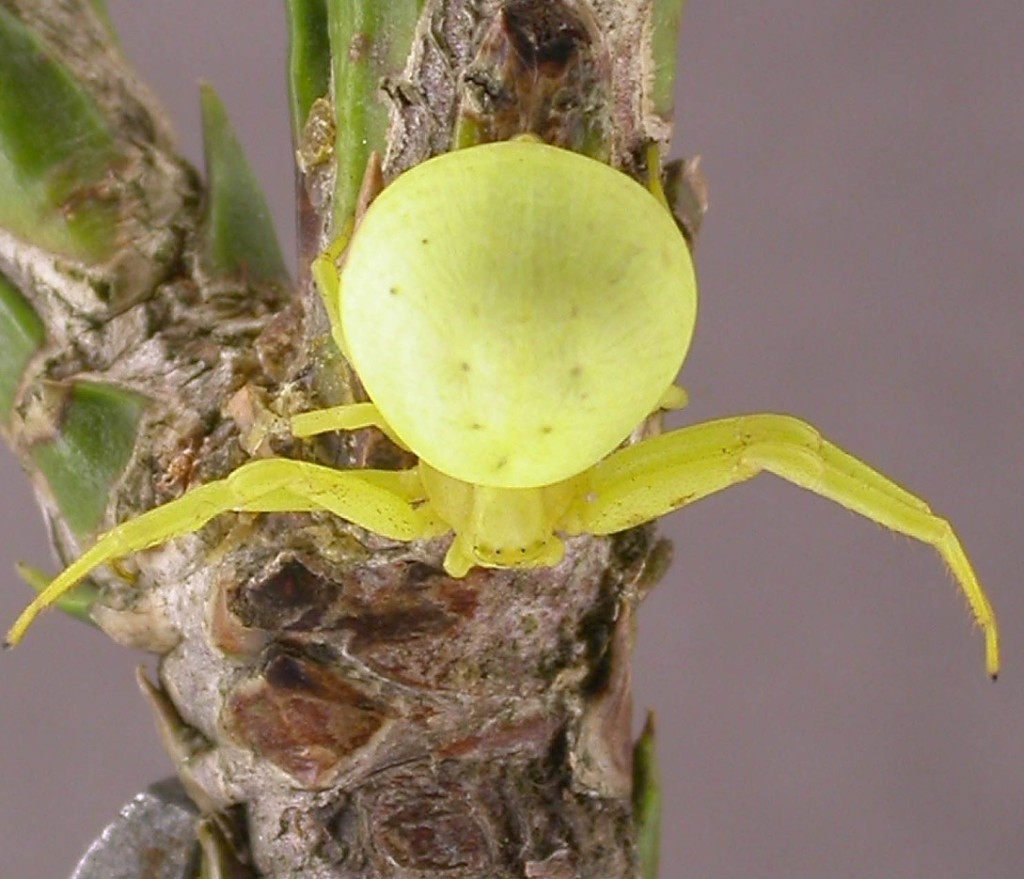
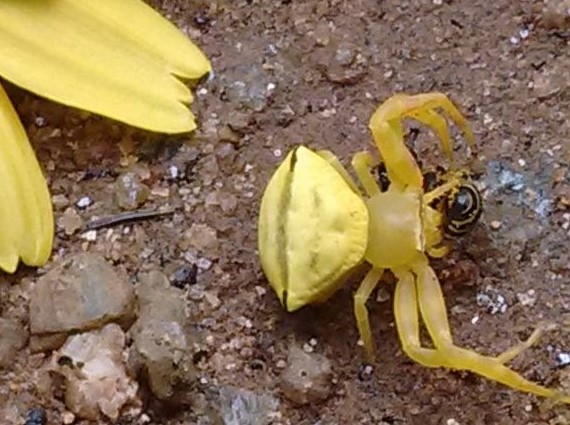
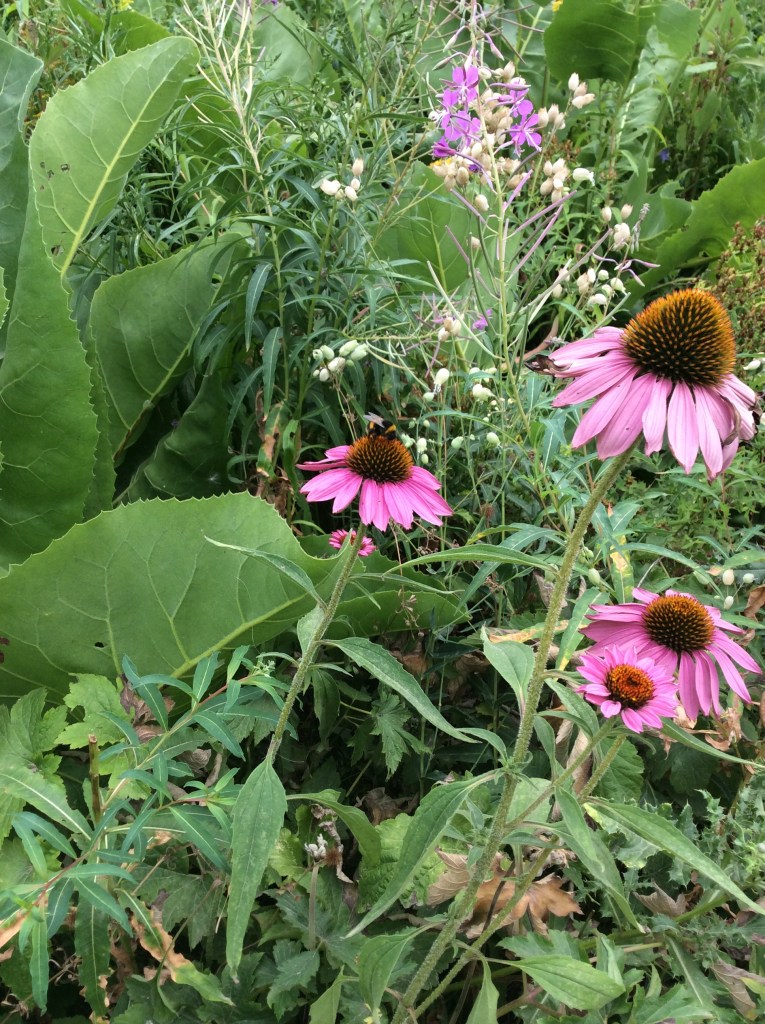
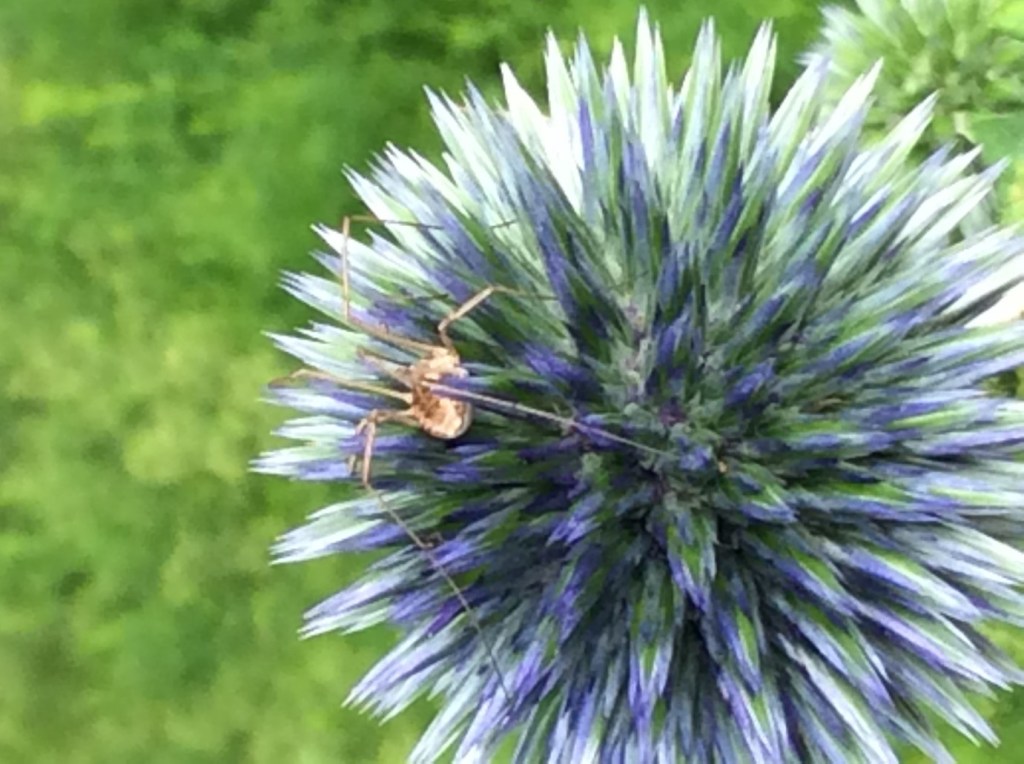
Misumena vatia (the flower spider), waiting for prey. ©S.H.Williams 2012

Gerald Durrell wrote in his famous book: My Family and Other Animals, that he excitedly discovered little spiders that ‘could change colour just as successfully as any chameleon’. He was referring to a family of spiders commonly known as crab-spiders. Crab-spiders get their name due to the position in which they hold their front legs that resembles a crab’s claws, and their ability to walk sideways like a crab. Although we cannot be clear which species Durrell had found, we know that a colour-changing crab spider which is quite common in the southern half of Britain during May-August is Misumena vatia (the flower spider).

Only about 30 species of crab-spider can change colour, most stay as different shades of brown or green with a slight pattern on the abdomen, but some species, including our native Misumena vatia, can alter their appearance quite drastically to blend into the background.

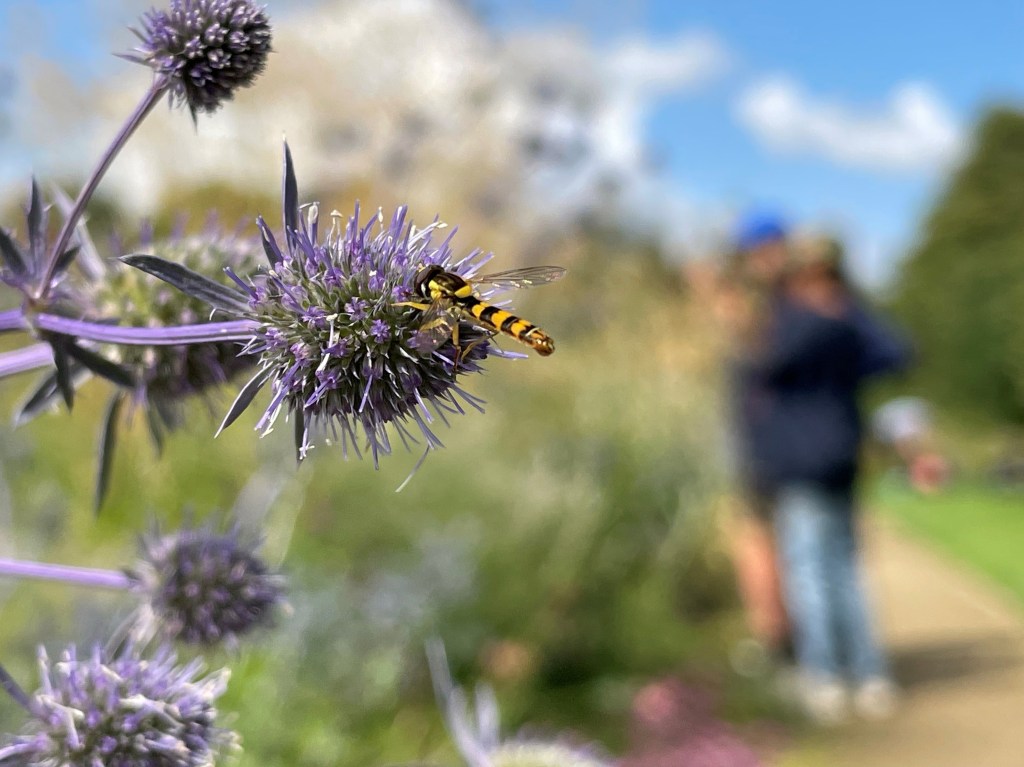
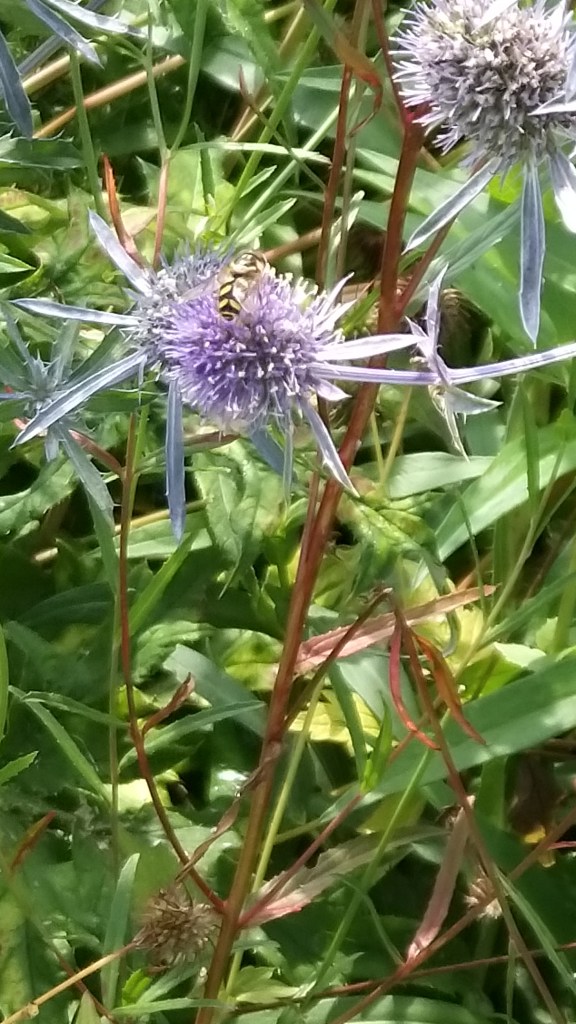
Crab-spiders do not spin webs like orb-weaving spiders would, instead they wait, poised for action, ready to attack insects that stray into their path. Misumena vatia (the flower spider), as its common name suggests, sits on flowers ready to pounce on any insect that chooses to land near it, often hover-flies or even bumblebees. The venom inside crab-spiders is quite strong as they can kill insects much larger than themselves but don’t worry, the flower spider and all other British crab-spiders only have small jaws and cannot hurt humans!

The flower spider is mostly seen as pure white or a lemony-yellow colour with a red mark on either side of its abdomen, but it has also been found green and even faintly slate-blue.
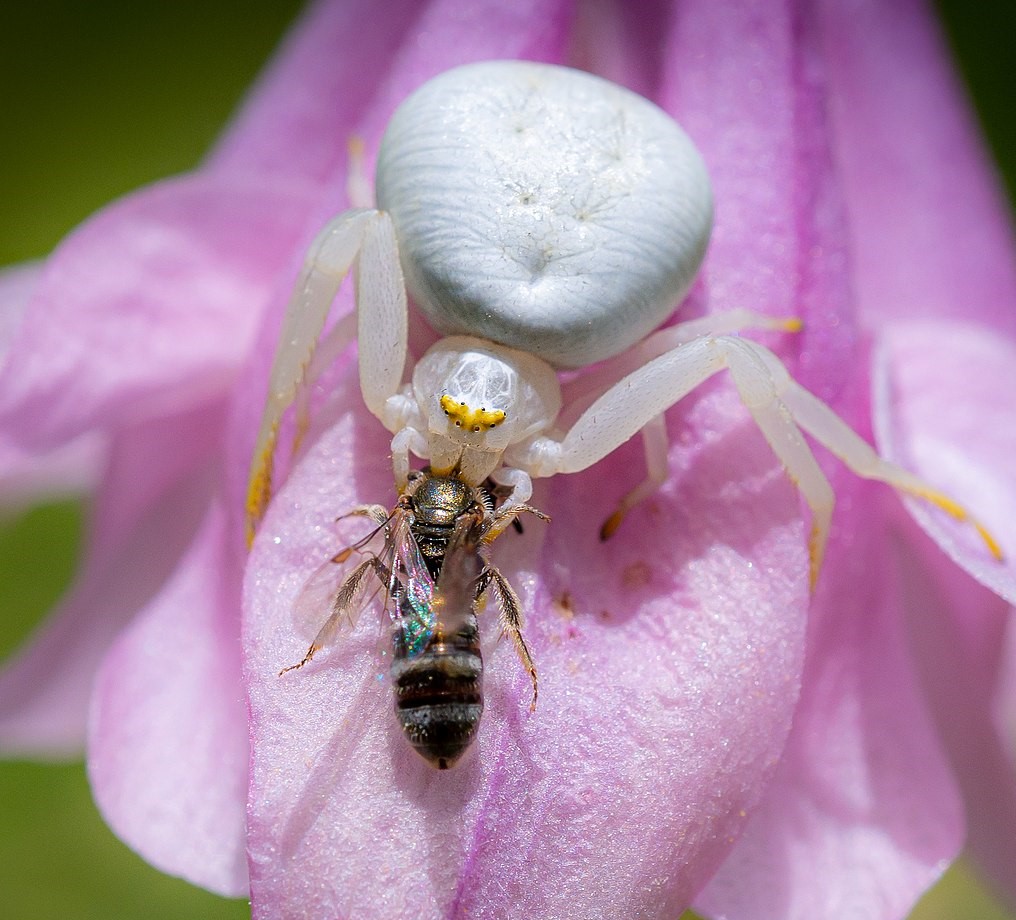
The total transformation from one colour to another takes several days and it is easier to go from yellow to white than white to yellow. These spiders can choose from many different types of flowers as they easily disappear into their surroundings. The favourite flower of Misumena vatia in Britain appears to be the ox-eye daisy, but it has also been seen on ragwort, and other flowers with white or yellow petals. Only the females can make these drastic colour changes though, the males are much smaller and sadly cannot change colour.

So next time you are out exploring for insects and spiders why not see if you can spot a Misumena vatia inside a flower?

Steven H. Williams

___________________________________________________________________________

Many thanks to Steven for a fascinating insight into these beautiful spiders. For more information, check out the British Arachnological Society website: https://www.britishspiders.org.uk

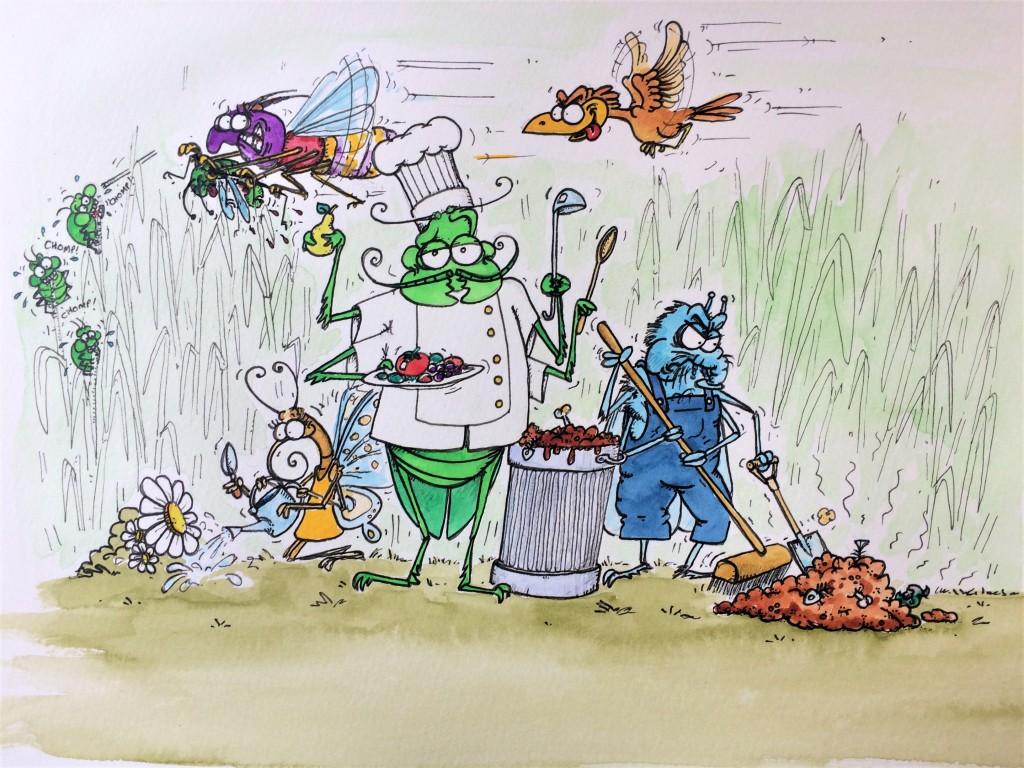
Insects: bestie or beastie?

What happens when a visitor to the museum, with a certain dislike of insects, meets an accommodating, and rather chatty, giant talking dung beetle?

Find out in the new, interactive family show at the museum , that is all about insects.

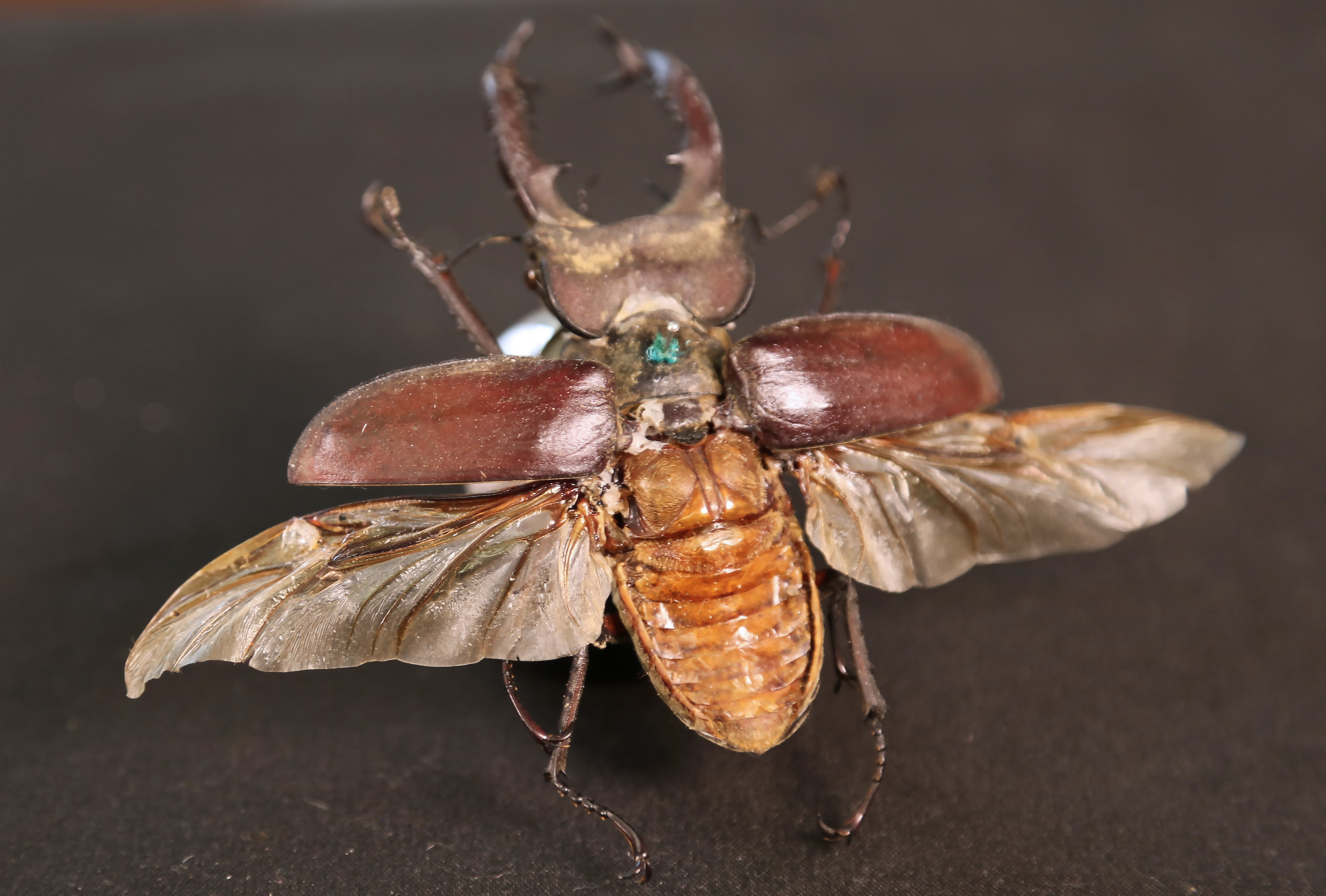
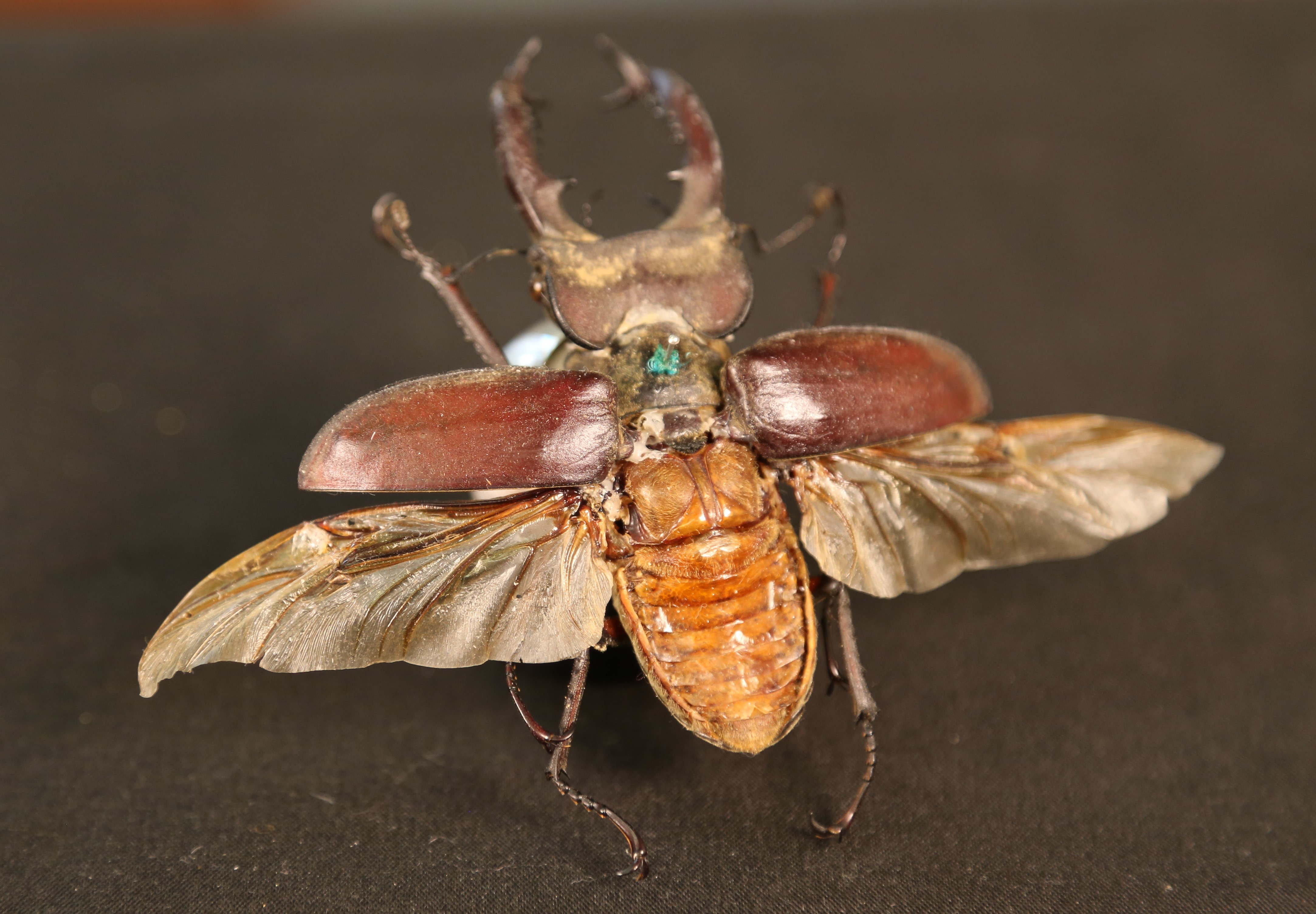
Stag beetle (Lucanus cervus) ©OUMNH


The unlikely pair take a journey, looking at the wonderful, and vitally important, role of insects in our world. From their position as pollinators, to their function in food chains; from the waste they recycle, to the many hours of joy and entertainment they bring as the heroes, and villains, of so many films, TV shows and books.


Come and see the show to find out how and why they are at risk, and what we can all do to help.

Insect Industry © Chris Jarvis


There will be two showings of “Insects: Beasties or Besties?” on Tuesday 26th October at 2pm and 3:30pm. Although the show is free of charge booking is essential. Tickets will be available to book soon. Keep an eye out for them on our What’s on page.

Bug or Beetle? The Red-legged Shieldbug

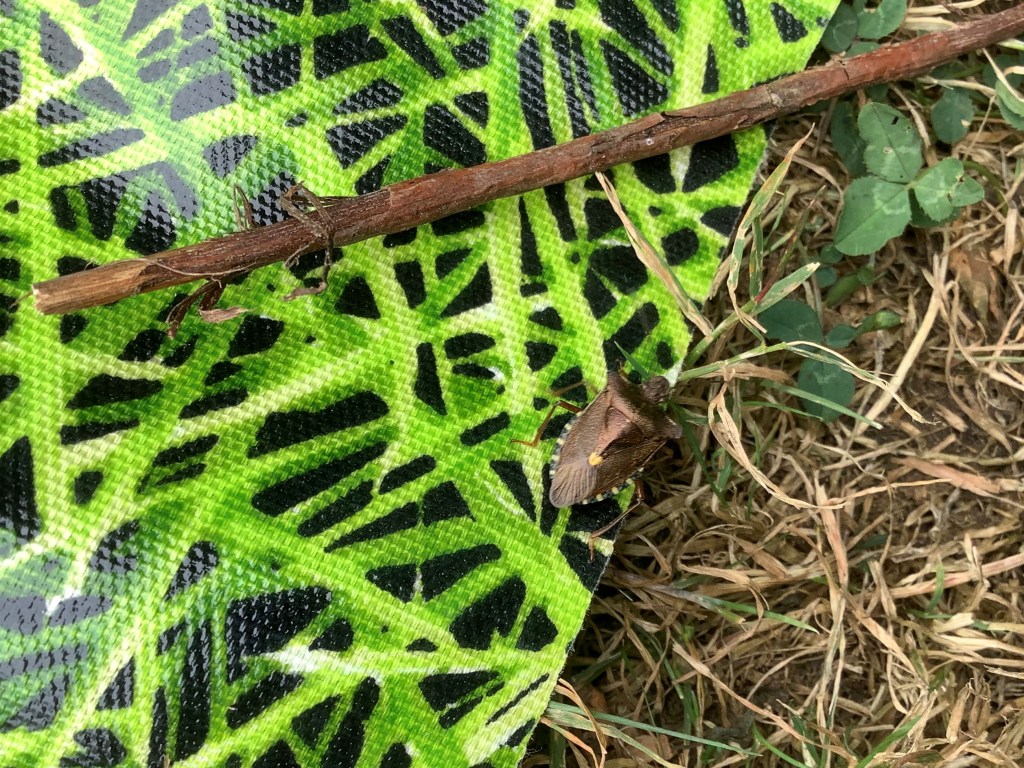
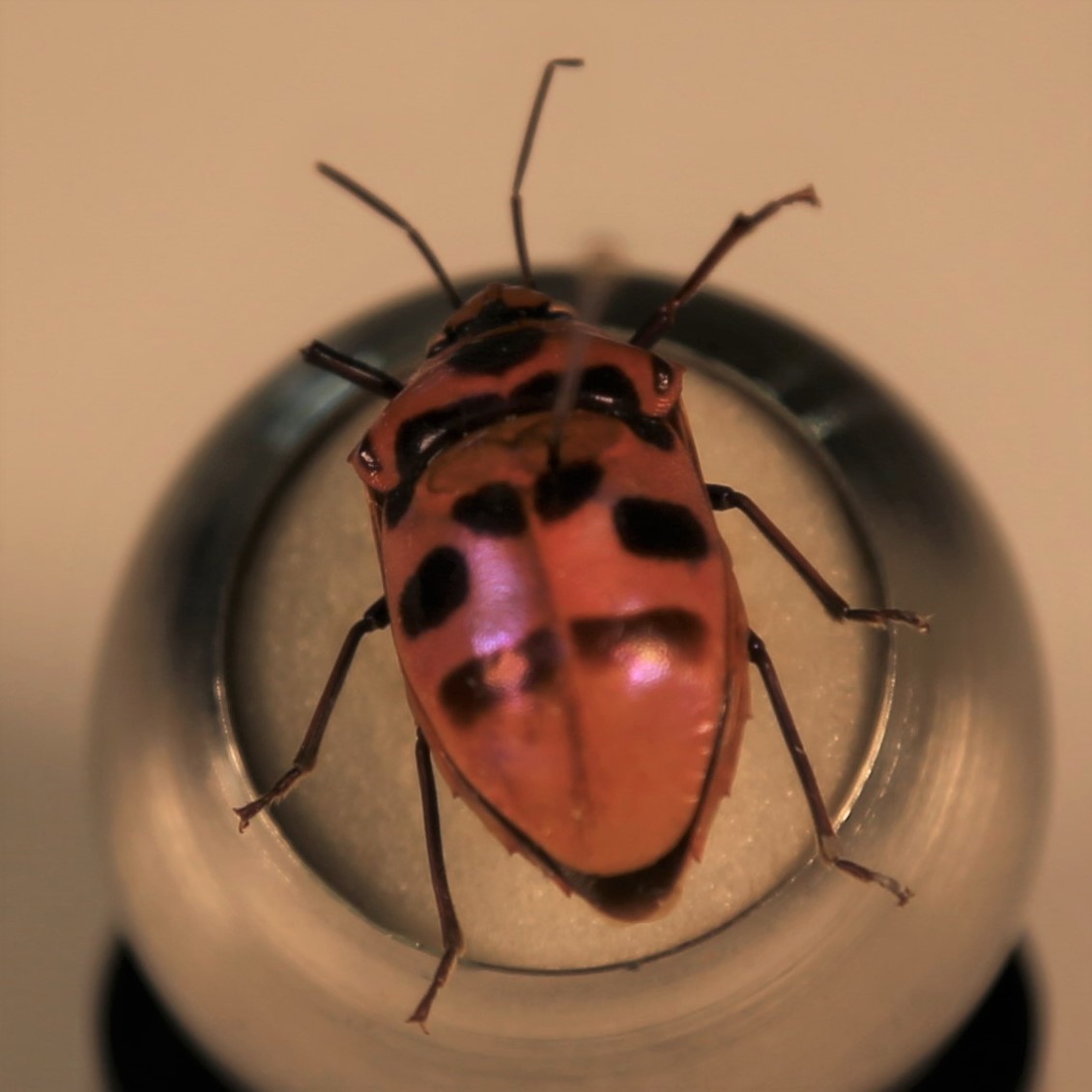
Young entomologist Noah Davis shares his discovery of a Red-legged shieldbug (Pentatoma rufipes) he found after it had a narrow escape from a spider’s web.

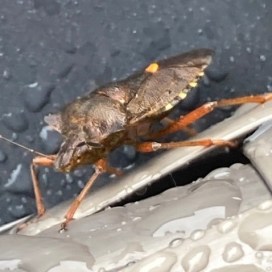
Whilst out on a trip to Norfolk on Tuesday 17th August, I spontaneously decided to examine the fenceposts on a porch to see what the spiders had caught. It was mainly different species of fly. It was a very rainy day, so I also checked on the bench below a few of the webs in case some had fallen off of the extremely elastic and strong webbing. Some of the heavier prey had fallen off, along with a large, brown, beetle-like insect with a vibrant orange triangle on the centre of its back. My companions and I held a debate on what (or who) it was. Some speculated a stinkbug due to the alarming orange area, and others (quite comically) a camera that was recording, until a quick Google search told us it was a Red-legged Shieldbug.

What is a shieldbug?

The Shieldbugs, which are members of the order hemiptera, or true bugs, are moderately sized insects with sucking mouths and the appearance of a heavily-armoured vehicle (on a miniature scale). Due to the fact that they have armoured backs, they are often mistaken for beetles or stinkbugs. The difference between a shieldbug and a stinkbug is that one makes a pong, the other doesn’t. (The terms ‘stinkbug’ and shieldbug are sometimes used interchageably, but some sheildbugs are stinkier than others because they secrete a pungent fluid when handled! – Ed.).

What does a Red-legged Shieldbug look like?

A slightly damp Shieldbug! Image credit: Noah Davis

In short, a shield. Its antennae are long and so is the head segment, and it has a proboscis. It also has broad shoulders with forward-facing forelegs. The next two legs are parallel with the abdomen and the last two are near the end of the abdomen. All the legs are reddish-brown (hence its name) and the whole back is a glossy golden brown. At the tip of the abdomen, there is a notoriously bright orange point, mostly to show predators that it is dangerous (even if it isn’t, but don’t tell the birds that!). Its wings (yes, it can fly) are what forms the point at the end of its back. There are brown and pale banded ridges of fronds at the perimeter of its back. The bug is about 11mm (11/25 inches) in length.

Where are they found?

Shieldbugs are distributed all over the British Isles and continental Europe. They are found near trees or forests.

Bug or Beetle?

Noah and his friends initially thought that their shieldbug looked ‘beetle-like’. There are a couple of ways to tell the difference between true bugs (Order: hemiptera) and beetles (Order: coleoptera). Beetles have chewing mouthparts but in bugs the mouthparts are shaped into a tube, called a rostrum, used to suck liquids. This is often tucked underneath the bug. Beetles have forewings which are hardened to provide a protective covering for the delicate hindwings. When you look at a beetle’s back these make an ‘X’ shape. In shield bugs, the forewings are often thinkened at the base. When you look at at their back, the folded wings make a ‘Y’ shape.

If you would like us to share your story about interesting insect, why not tell us about it? You can get in touch using the Contact Us page, or email us at hopelearning@oum.ox.ac.uk. We’ll need permission from a parent or guardian to use your name.

Photo Gallery

If you would like us to share one of your photos, please email it to hopelearning@oum.ox.ac.uk. If you want us to use your name in the image credit, we will need permission from your parent or guardian.

Lily Beetle

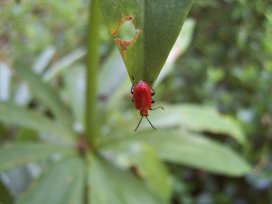
Despite being viewed as a pest by many a gardener, for munching the leaves of their prized lilies, the lily beetle (Lilioceris Lilii) is a favourite insect of Andrew Salisbury, principal entomologist for the Royal Horticultural Society (RHS). In this short film Andrew tells us a bit about the lily beetle and why he finds it so fascinating.

Are there any insects that are often considered pests that you have a particular interest in? Let us know in the comments below or via our contact us page.

Raising Moths

Ben brought in some Poplar Hawk Moths to show the other participants at our recent summer school. Here he describes how he raised them from eggs he received as a gift from his grandfather.

Last year during lockdown my Grandpa gave me 32 hawk moth eggs: 30 eyed and two privet. Not the most common of presents you might think, but these turned into the most enjoyable gift. I was very excited as I tore open the parcel and found the eggs safely packed in a small tube. It took roughly a week for the leafy-green eggs to turn into the most delightful little caterpillars. I decided to call them all Jim. The first thing they went towards was the fresh willow that lay in a small, water-filled jam-jar.

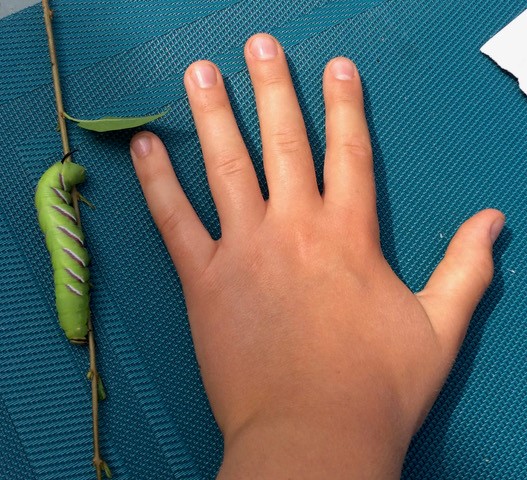
Poplar Hawk moth caterpillar with Ben’s hand for scale. Photo credit: Ben Atwell

Immediately, they started taking chunks the size of their heads out of the leaves until there were no leaves left inside the tank. I was very surprised by how much they ate in proportion to their size. Every day they grew bigger until, within 4 weeks, they were the length of my index finger! They were bright green with white stripes, pink spots and little pointy tails. To help them grow, they shed their skins every few days. Sadly, one little Jim got stuck in his skin whilst shedding and died. Willow-collecting took a lot of effort as it involved daily trips to the canal, but this was a welcome break from staring at my computer all day during online school.

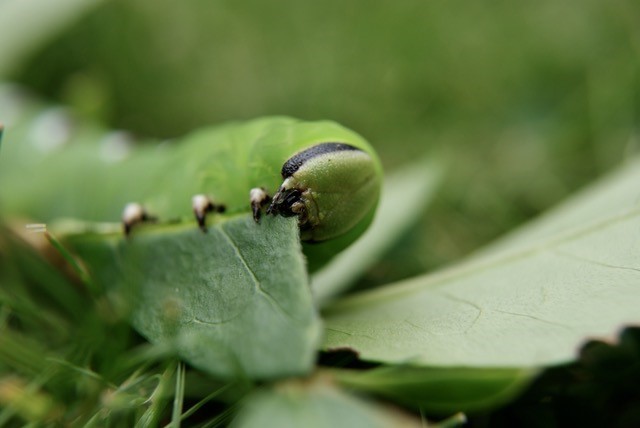
Poplar Hawk Moth larva feeding. Photo credit: Ben Atwell

One morning we found that a lot of the caterpillars were wandering around, banging their heads on the bottom of the tank. They were also turning a darker green which (after a bit of research) we found out meant they needed to bury and become a chrysalis. We put a deep layer of soil into the tank and within minutes they had disappeared. We tucked them up in the shed for winter and waited.

After months of hibernation, they started emerging this spring with crumpled wings, looking very like dead leaves. After stretching out their wings we noticed that we couldn’t see the eyes that the eyed hawk moths are known for, but as we later realised, they only show the eyes as a defence mechanism if they were under attack. Normally it would take a while for the males to seek out the females using their fanned antenna, but because they were in a large tank, it was easy for them to find each other and mate. Within a few days they had laid over 1,000 little green eggs! So, the process of willow collecting began again, but this time, after checking with the county moth recorder, we released the little caterpillars (who this year I called Jeff) into our local wildlife reserve, hoping that they survive and go on to repeat the process in the wild this year.

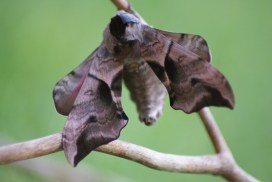
Poplar hawk Moth adult. Photo credit: Ben Atwell

We are still waiting for the privet chrysalises to hatch, but to keep me busy, my Grandpa sent me 15 poplar hawk moth eggs this spring. These have already been through one cycle of eggs-caterpillars-chrysalis-moth-eggs and I gave some of the eggs to the museum during the Insect Investigators Summer School. I hope the staff have time to collect all that poplar!

The Poplar Hawk Moth, Laothoe populi, is a beautiful insect found thrououghout the UK and is common wherever their foodplants can be found: mainly the poplar trees from which they get their name, aspen and willows. Ben describes the voracious appetite of the larvae well. The adults don’t feed at all and so are short-lived. You can find the adult moth from May to July and the caterpillars from June to October. In Southern England there may be a second generation of adults in the autumn.